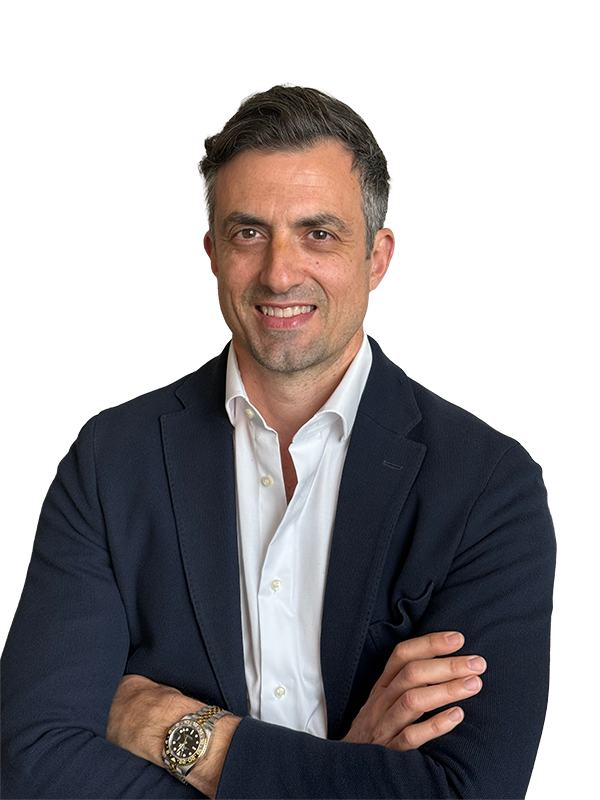









The Future of Work Isn’t Artificial Intelligence — It’s How Humans Learn to Relate Under Pressure

Rethinking Leadership Through Human Connection And Relational Intelligence
Kerry-Lyn Stanton-Downes argues that organisational success depends on relational wealth, not strategy alone, urging leaders to prioritise human connection, trust, and relational capacity in an AI-driven workplace.
T here are interviews that inform, and then there are those that quietly reshape how we understand leadership, business, and human potential. Entrepreneur Prime’s conversation withKerry-Lyn Stanton-Downesfirmly belongs to the latter. In a business landscape often dominated by metrics, systems, and scale, Stanton-Downes offers a perspective that challenges conventional thinking at its core—arguing that the true driver of sustainable success lies not in strategy alone, but in the quality of human connection.
Kerry-Lyn Stanton-Downes delivers a profound, timely perspective, blending science and humanity to reshape leadership thinking for a more connected future.
A rare voice bridging psychotherapy, neuroscience, and leadership, Stanton-Downes brings both intellectual depth and lived experience to her work. Her journey—from personal adversity to becoming a leading thinker on relational capacity—underpins her insights with authenticity. This fusion of personal truth and professional rigour makes her approach not only compelling but urgently relevant in today’s evolving workplace.
Central to her philosophy is the concept of “relational wealth”—the accumulated trust, safety, and connection between individuals within an organisation. Much like financial capital, it is something that must be intentionally built before it can be drawn upon. According to Stanton-Downes, many leaders fail not because they lack competence, but because they attempt to solve fundamentally relational problems with operational solutions. The result is often teams that appear functional on the surface, yet quietly struggle beneath with eroding trust and disconnection.
Highlights from the Interview
- Introduces relational wealth as a critical business asset
- Challenges the overreliance on operational solutions for human problems
- Presents the 8 Principles of Relational Capacity as a leadership framework
- Identifies relational poverty as a hidden cause of dysfunction
- Reframes psychological safety as an outcome, not a policy
- Explains how small daily interactions shape trust and performance
- Positions relational capacity as a future competitive advantage
- Explores how AI exposes, rather than fixes, relational weaknesses
- Emphasises leadership as a relational, not purely strategic, discipline
- Advocates for human-centred leadership in an AI-driven world
Her forthcoming book, Beyond Words: How to Lead People from Survival to Success, expands on this idea, positioning relational capacity as the defining leadership skill of the future. As artificial intelligence continues to reshape the mechanics of work, Stanton-Downes suggests it will also expose a critical gap: organisations with low relational capacity will struggle, regardless of how advanced their technology may be. Rather than viewing AI as a threat, she frames it as a catalyst—one that will reward organisations capable of remaining deeply human.
“Relational capacity is the infrastructure that determines whether AI strengthens or destabilises your organisation.”
– Kerry-Lyn Stanton-Downes
What sets her work apart is its practical application. The “8 Principles of Relational Capacity”—Presence, Reflection, Curiosity, Respectful Candour, Vulnerability, Navigating Difference, Being in Service of a Shared Goal, and a Mindset of Abundance—offer leaders a tangible framework for improving how people relate to one another. These are not abstract ideals but daily disciplines that can be embedded into routine interactions. Even simple practices, such as asking team members what they need from a meeting, can significantly shift the relational dynamic by fostering openness, clarity, and shared purpose.
Stanton-Downes also introduces the concept of “relational poverty,” a condition where trust and connection have quietly deteriorated. Its signs are often subtle: overly polite conversations lacking depth, avoidance of difficult discussions, and a noticeable decline in curiosity. Left unaddressed, these small fractures accumulate over time, eventually undermining performance and cohesion. By the time issues become visible, the underlying relational damage has often been developing for months, if not years.
A key insight from the interview is that every interaction within an organisation either builds or erodes relational wealth. Small moments—acknowledging a colleague, showing curiosity, or addressing tension—act as deposits, while neglect, avoidance, or defensiveness function as withdrawals. Over time, these interactions determine whether a team can navigate pressure effectively or fracture under it.
Importantly, Stanton-Downes distinguishes relational intelligence from emotional intelligence. While the latter focuses on individual awareness and regulation, relational intelligence concerns what happens between people—the dynamic space where trust, culture, and performance are formed. It is within this space, she argues, that leadership truly operates.
Her perspective on psychological safety further challenges conventional thinking. Rather than being something that can be mandated through policy or training, she describes it as an outcome of strong relational foundations. When trust, curiosity, and the ability to repair after conflict are consistently present, psychological safety emerges naturally.
Looking ahead, Stanton-Downes envisions a workplace shaped by smaller, more interconnected teams, where leadership is defined less by authority and more by the ability to maintain connection under pressure. As AI assumes more transactional tasks, the human aspects of work—judgement, collaboration, and navigating complexity—will become increasingly central. In this context, relational capacity becomes not just a leadership skill, but a competitive advantage.
Ultimately, her message is clear: the future of business will not be determined solely by what organisations build, but by how their people relate. Technology may advance rapidly, but the need for genuine human connection remains constant. Leaders who recognise and invest in this will be best positioned to thrive in an increasingly complex and AI-driven world.
Entrepreneur Prime’s feature on Kerry-Lyn Stanton-Downes is more than an interview—it is an invitation to rethink the very foundations of leadership.